
Blog
Forest or Forrest? Understanding the Difference, Correct Spelling, Meaning, and Usage (2026 Guide)


The words Forest and Forrest are often confused because they look and sound very similar. However, they do not have the same meaning or usage. One is a common English noun that refers to a large area covered with trees, while the other is primarily used as a surname or given name. Knowing when to use Forest or Forrest correctly is important for students, writers, professionals, and anyone who wants to communicate clearly.
In this comprehensive 2026 guide, we explain the meaning, spelling, pronunciation, history, examples, grammar rules, and common mistakes involving Forest and Forrest. By the end of this article, you will understand exactly which spelling is appropriate in different situations and avoid one of the most common English spelling errors.
What Does Forest Mean?
A forest is a large area of land covered primarily with trees, plants, wildlife, and natural ecosystems. Forests are among the world’s most valuable natural resources because they support biodiversity, regulate the climate, produce oxygen, store carbon, and provide habitats for millions of species.
Examples include:
- Tropical forests
- Rainforests
- Temperate forests
- Boreal forests
- National forests
- Protected forests
Example sentences:
- We spent the weekend hiking through the beautiful forest.
- The national forest attracts thousands of visitors every year.
- Many endangered animals depend on the forest for survival.
- Governments invest in forest conservation to protect biodiversity.
In standard English, forest is always the correct spelling when referring to wooded land or natural ecosystems.
What Does Forrest Mean?
Forrest is not the standard English word for a wooded area. Instead, it is most commonly used as a personal name or family surname.
Some well-known examples include:
- Forrest Gump, the fictional character from the famous novel and film.
- Nathan Bedford Forrest, a historical American military figure.
- Individuals whose first or last name is Forrest.
Example sentences:
- Forrest Gump remains one of the most recognizable fictional characters in cinema.
- Mr. Forrest will attend today’s business meeting.
- Emily Forrest published a new research paper.
Outside of names, Forrest should generally not replace forest.
Forest vs Forrest: Key Differences
| Feature | Forest | Forrest |
|---|---|---|
| Standard English noun | Yes | No |
| Means wooded land | Yes | No |
| Personal name | Rare | Yes |
| Family surname | Rare | Yes |
| Used in geography | Yes | No |
| Used in environmental science | Yes | No |
| Used for places named after people | Sometimes | Yes |
| Common dictionary definition | Large wooded area | Proper noun (name) |
The important rule is simple:
If you are talking about trees, nature, wildlife, or land covered with trees, use “forest.” If you are referring to someone’s name, use “Forrest.”
Why People Confuse Forest and Forrest
There are several reasons why these words are frequently mixed up.
Nearly Identical Pronunciation
Both words sound almost the same in everyday English, making spelling mistakes common.
Famous People and Fictional Characters
The popularity of Forrest Gump causes many people to mistakenly believe that “Forrest” is the correct spelling for wooded land.
Typing Errors
Modern keyboards and autocorrect systems occasionally substitute one spelling for the other, especially when writing quickly.
Limited Exposure
Many English learners encounter Forrest only as a name but mistakenly assume it is another acceptable spelling of forest.
Examples of Correct Usage
Understanding the proper context makes choosing the correct spelling easy.
Correct Examples Using Forest
- The forest is home to hundreds of bird species.
- We explored a dense pine forest during our vacation.
- Protecting the forest helps reduce climate change.
- Wildfires can destroy an entire forest within days.
- Forest conservation benefits future generations.
Correct Examples Using Forrest
- Forrest Gump inspired millions of viewers around the world.
- Dr. Forrest presented his latest medical research.
- Mrs. Forrest accepted the community leadership award.
- James Forrest works as a software engineer.
- The award was presented by Professor Forrest.
The Importance of Forests in 2026
As environmental challenges continue to grow, forests play a more important role than ever. Governments, conservation organizations, and communities around the world are investing in forest protection and restoration to combat climate change and preserve biodiversity.
Key benefits of forests include:
- Producing oxygen essential for life.
- Absorbing carbon dioxide, helping reduce greenhouse gases.
- Protecting wildlife habitats for countless plant and animal species.
- Preventing soil erosion and maintaining healthy landscapes.
- Supporting clean water supplies through natural filtration.
- Providing sustainable resources such as timber, medicinal plants, and food.
In 2026, sustainable forest management remains a global priority as nations work together to conserve natural ecosystems for future generations.
How to Remember the Difference
A simple memory trick can help:
- Forest = Trees and Nature
- Forrest = Person’s Name
Think of it this way:
- If you see trees, use Forest.
- If you see a person, especially someone named Forrest, use Forrest.
This easy rule eliminates confusion in nearly every situation.
Common Grammar Mistakes
Many writers make the following errors:
Incorrect:
- We walked through the Forrest.
- The tropical Forrest contains many animals.
Correct:
- We walked through the forest.
- The tropical forest contains many animals.
Another mistake is assuming that Forrest is an alternative spelling of forest. It is not. Except for proper names, the correct English word is forest.
Conclusion
Although Forest or Forrest look almost identical, their meanings are very different. Forest is the correct English noun used to describe large wooded areas, natural ecosystems, and landscapes filled with trees. It is the spelling used in environmental science, geography, education, literature, and everyday communication. Forrest, on the other hand, is primarily a proper name used as a first name or surname and should not be substituted for the common noun forest.
By understanding the distinction between these two words, we can write with greater accuracy and confidence. Whether discussing conservation, wildlife, hiking, or famous individuals such as Forrest Gump, choosing the correct spelling enhances clarity, professionalism, and credibility.
Frequently Asked Questions (FAQ)
What is the difference between Forest and Forrest?
Forest refers to a large area covered with trees, while Forrest is generally used as a person’s first or last name.
Is Forrest another spelling of Forest?
No. Forest is the correct standard English spelling for wooded land. Forrest is usually a proper name.
Why is Forrest Gump spelled with two Rs?
Because Forrest is the fictional character’s given name, not the common noun referring to a wooded area.
Which spelling should I use in school assignments?
Use forest when writing about nature, geography, biology, or the environment.
Can Forrest be used as a place name?
Yes. Some cities, streets, parks, or landmarks may include Forrest because they are named after individuals.
How can I remember the difference?
Remember: Forest = Trees and Forrest = Person’s Name.
Why are forests important in 2026?
Forests help regulate the climate, support biodiversity, absorb carbon dioxide, protect wildlife habitats, maintain water quality, and contribute to sustainable development worldwide.
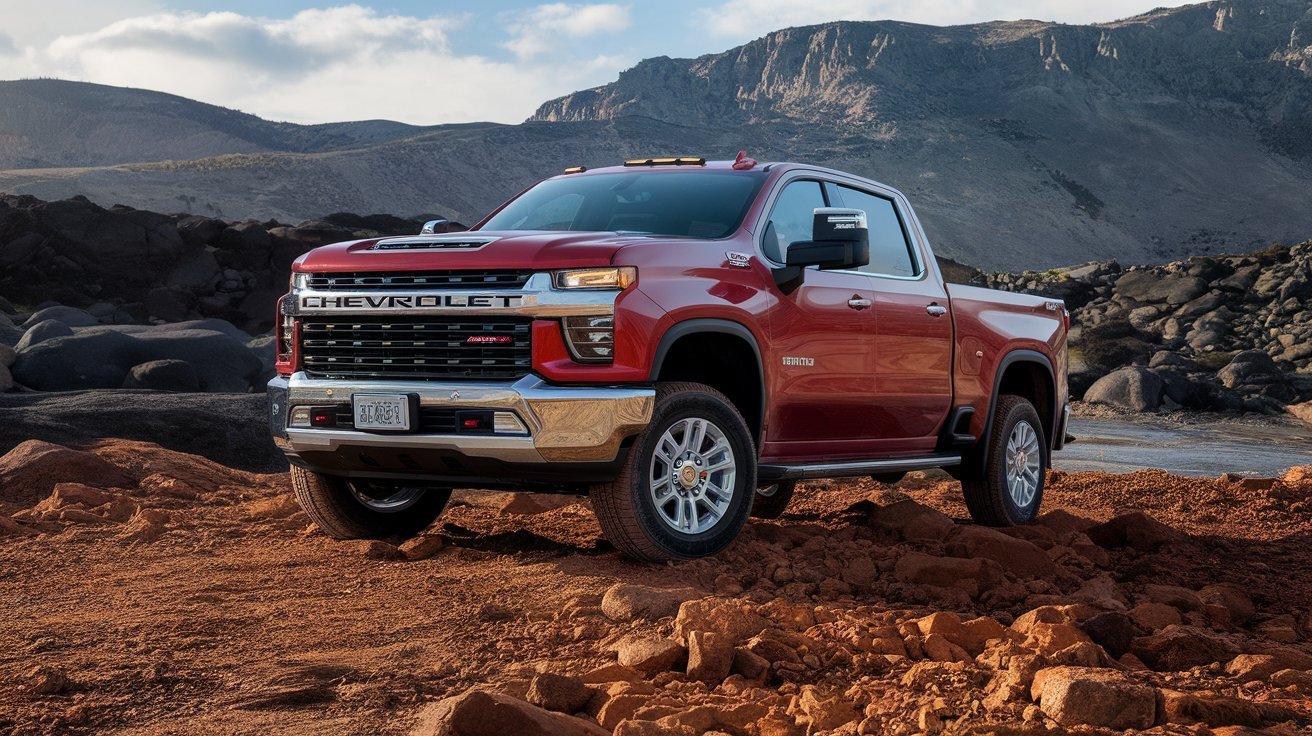
The 2027 2028 Chevrolet Silverado HD is an important topic for truck buyers who want serious towing capacity, heavy-duty capability, and the latest Chevrolet technology without necessarily waiting for a complete redesign. The Silverado HD family includes the 2500 HD and 3500 HD, designed for customers who need substantially more capability than a light-duty Silverado 1500.
For 2027, Chevrolet is expected to continue the current-generation HD formula while making meaningful powertrain updates. Recent industry reporting indicates that the 2027 Silverado HD is scheduled to receive updated gasoline and diesel engines rather than an entirely new architecture. At the same time, the next major Silverado HD generation is reportedly planned for the 2029 model year, with production expected to begin in late 2028.
That makes the 2027 and 2028 Silverado HD particularly interesting: these model years could represent the final development stage of the current generation before Chevrolet introduces a substantially redesigned HD pickup.
2027 Chevrolet Silverado HD: What Is Expected to Change?
The 2027 Chevrolet Silverado HD is expected to retain the basic current-generation design while receiving important mechanical improvements. Rather than being an all-new truck, the focus appears to be on powertrain development, capability, refinement, and continued equipment updates.
Recent reporting indicates that Chevrolet is preparing an updated 6.6-liter gasoline V8, reportedly associated with GM’s L8S engine designation. The engine is expected to replace the current 6.6-liter gasoline V8 while maintaining the same basic displacement.
The diesel side is also expected to receive an important change. Reporting indicates that the current 6.6-liter Duramax L5P V8 is expected to be replaced by an engine carrying the L6P designation. Details about the final displacement and complete output figures have not been officially confirmed, so buyers should treat early specifications as provisional rather than guaranteed.
This approach would allow Chevrolet to improve the truck’s mechanical performance without immediately replacing the entire platform.
Silverado HD 2500 and 3500: Capability for Heavy-Duty Work
The Silverado 2500 HD and Silverado 3500 HD serve different needs within Chevrolet’s heavy-duty lineup. Both are designed for demanding towing and hauling, but the 3500 HD is positioned for buyers who require greater maximum capability.
The choice between the two depends heavily on the trailer, payload requirements, hitch configuration, and how frequently the truck will operate near its limits. A buyer towing a large fifth-wheel or gooseneck trailer should consider the complete combination of truck payload, trailer weight, tongue or pin weight, axle ratings, and available equipment, rather than looking only at a maximum tow-rating number.
For commercial operators, farmers, contractors, recreational towing customers, and heavy trailer owners, this distinction is particularly important.
The 2027 updates therefore matter because a heavy-duty truck’s engine is not simply about acceleration. Torque delivery, cooling, transmission calibration, durability, and sustained-load performance can be just as important when towing for long distances.
2027 Silverado HD Engines and Duramax Expectations
Engine choice will likely remain one of the biggest reasons buyers consider the 2027 Silverado HD.
The gasoline engine is expected to remain a 6.6-liter V8, although reporting indicates that the L8S update will replace the existing gasoline engine. On the diesel side, the reported L6P Duramax would replace the current L5P.
For customers who regularly tow heavy trailers, a diesel powertrain can be attractive because of its strong low-speed torque characteristics and suitability for sustained towing. Gasoline power can make more sense for buyers who use their truck primarily for everyday driving, occasional towing, construction work, or hauling without constantly operating at maximum capacity.
The important point for 2027 is that engine availability and final output specifications should be confirmed through Chevrolet’s official specifications before placing an order. Early reports can provide a useful preview, but they should not be treated as final factory specifications.
What About the 2028 Chevrolet Silverado HD?
The 2028 Chevrolet Silverado HD is especially interesting because it may sit between the current-generation truck and the next major redesign.
Based on the latest reporting available in 2026, the next-generation Silverado HD is expected for the 2029 model year, rather than 2028. GM Authority reports that production of the next-generation Silverado HD and GMC Sierra HD is planned for the fourth quarter of 2028, with the vehicles arriving as 2029 model-year products.
That means the 2028 Silverado HD is more likely to represent a continued current-generation model with potential equipment, technology, appearance, or powertrain adjustments rather than the fully redesigned truck many shoppers may have expected.
For buyers who do not need the newest possible architecture, this could actually make the 2028 model attractive. A mature platform can offer the benefit of established engineering, known service procedures, and a broad selection of accessories.
Design, Interior and Technology
The current Silverado HD already emphasizes a combination of work-oriented durability and modern cabin technology. Chevrolet has been moving toward increasingly digital interiors across the Silverado family, although the HD’s priorities remain different from those of the lighter-duty Silverado 1500.
The next-generation 2027 Silverado 1500 demonstrates Chevrolet’s broader direction, with a redesigned exterior, expanded digital technology, new V8 engines, and additional driver-assistance features. However, these 1500 developments should not automatically be assumed to apply to the 2027 or 2028 Silverado HD. Chevrolet has separate development schedules for its light-duty and heavy-duty trucks.
For HD buyers, practical features remain particularly important. Trailer technology, cameras, towing information, connectivity, comfortable seating, storage, and driver assistance can make a significant difference when the truck is used for long workdays or extended towing trips.
Towing, Payload and Choosing the Right Configuration
When researching the 2027 2028 Chevrolet Silverado HD, towing capacity should never be considered separately from payload.
A truck may have a very high published maximum tow rating, but the actual trailer a specific truck can safely handle depends on its configuration. Factors can include cab style, bed length, engine, drivetrain, axle ratio, hitch equipment, payload rating, and trailer type.
The 3500 HD can be especially appealing for customers carrying substantial pin weight from fifth-wheel and gooseneck trailers. The 2500 HD may be a better fit for buyers who need serious towing but do not regularly approach the heavier end of the HD segment.
Before buying, check the truck’s actual door-jamb payload label and Chevrolet’s configuration-specific towing information rather than relying on a single headline maximum.
Should You Wait for the 2029 Silverado HD?
For shoppers considering a 2027 or 2028 Silverado HD, the timing question is important.
If you need a heavy-duty truck soon, waiting several years simply for a future redesign may not make financial or practical sense. The updated 2027 powertrains could make that model particularly interesting for buyers who want improved mechanical technology while staying with the current HD generation.
However, buyers who want the next-generation Silverado HD may want to monitor the 2029 model-year program. Current reporting points to the next-generation HD arriving for 2029, with production planned to begin in late 2028.
The decision therefore comes down to priorities: buy the proven current generation with updated hardware, or wait for the larger redesign.
2027 vs. 2028 Chevrolet Silverado HD: Which One Makes More Sense?
The 2027 Silverado HD could be the more significant choice if the reported engine updates arrive as expected. Buyers interested in the latest available powertrain technology may find the 2027 model particularly appealing.
The 2028 Silverado HD, meanwhile, could be attractive to customers who prefer the final years of a mature generation before a major redesign. Depending on pricing, incentives, equipment, and availability, it could potentially offer a strong balance between capability and established engineering.
Neither should be automatically considered better for every buyer. The right choice depends on towing requirements, budget, engine preference, desired equipment, ownership period, and willingness to wait for the next generation.
Most importantly, shoppers should distinguish between confirmed Chevrolet specifications and industry reports when researching future model years.
Conclusion
The 2027 2028 Chevrolet Silverado HD lineup is shaping up to be an important transition period for Chevrolet’s heavy-duty trucks. The 2027 model is expected to receive significant powertrain updates, including a new gasoline engine designation and a new Duramax diesel according to recent industry reporting.
The 2028 model is expected to remain part of the current generation, while the larger next-generation Silverado HD is now reportedly scheduled for the 2029 model year.
For buyers, that creates three logical strategies: choose the 2027 Silverado HD for its expected mechanical updates, consider the 2028 Silverado HD as a mature version of the current platform, or wait for the more substantial 2029 redesign.
Whatever model year you choose, focus on the factors that matter most for heavy-duty ownership: engine choice, payload, towing configuration, trailer type, drivetrain, technology, service support, and real-world workload. Those details matter far more than simply choosing the newest model-year number.

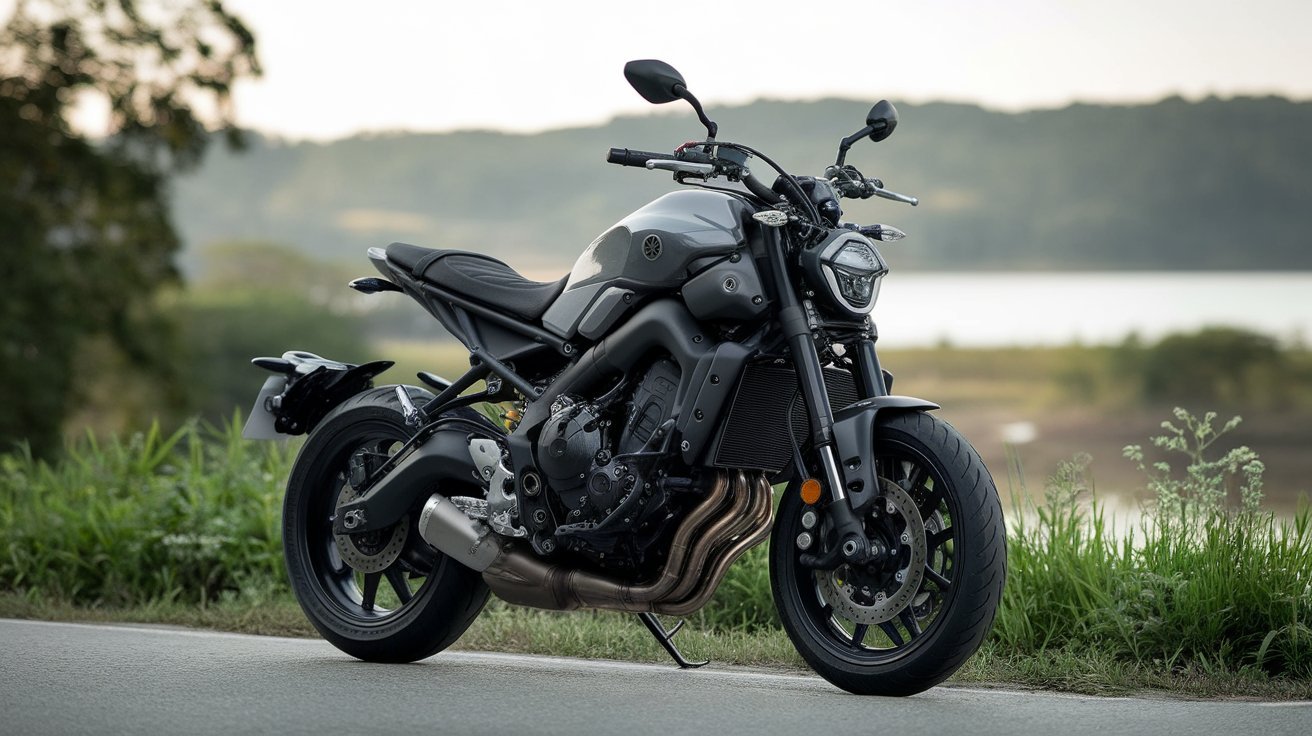
The Yamaha FZ-09 remains one of the most recognizable names associated with Yamaha’s performance-focused naked motorcycles. In many markets, the motorcycle is known today as the Yamaha MT-09, while the FZ-09 name was used for earlier versions. The model has built a strong reputation around its combination of a torquey three-cylinder engine, lightweight chassis, aggressive styling, modern electronics, and everyday usability.
For 2026, Yamaha’s U.S. lineup lists the MT-09 as a continuing Hyper Naked model, with a starting MSRP of $10,899. Yamaha also offers the higher-spec MT-09 SP, listed at $12,699 in the 2026 U.S. lineup.
Yamaha FZ-09 and MT-09: Understanding the Name
The first thing to understand about the Yamaha FZ-09 is the relationship between the FZ and MT names. Yamaha marketed the motorcycle as the FZ-09 in the United States during its earlier years, while the same basic motorcycle was sold internationally as the MT-09.
The name changed in the U.S. market as Yamaha consolidated its motorcycle naming strategy around the MT designation. Consequently, when riders search for a 2026 Yamaha FZ-09, they are generally looking for the modern Yamaha MT-09.
The current generation continues the philosophy that made the original FZ-09 popular: provide an exciting engine and agile handling without the bulk and complexity associated with larger motorcycles.
Yamaha describes the MT-09 as a Hyper Naked motorcycle, combining aggressive design with advanced technology and a strong focus on rider engagement.
Yamaha FZ-09 Engine and Performance
At the center of the modern MT-09 is Yamaha’s 890cc liquid-cooled, four-stroke, DOHC, four-valve inline three-cylinder engine. This three-cylinder configuration is one of the motorcycle’s defining characteristics because it offers a distinctive balance between the strong low- and mid-range response of a twin and the smoothness and excitement associated with a four-cylinder engine.
The current specification produces approximately 119 PS at 10,000 rpm and 93 Nm of torque at 7,000 rpm. The engine uses electronic fuel injection and is paired with a six-speed constant-mesh transmission and chain final drive.
This combination gives the MT-09 a broad performance character. Rather than requiring extremely high engine speeds to feel energetic, the CP3 three-cylinder engine delivers substantial torque through the middle of the rev range. That makes the motorcycle particularly effective for city riding, overtaking, mountain roads, and spirited weekend riding.
The official Yamaha figures also list fuel consumption at approximately 5.0 liters per 100 kilometers, although real-world consumption naturally varies according to riding style, traffic, speed, load, and road conditions.
Chassis, Suspension, Brakes, and Handling
The Yamaha FZ-09’s successor is designed around a lightweight, agile chassis that complements its powerful engine. The current MT-09 uses a diamond-type frame, a 41 mm upside-down front fork, and a link-type rear suspension system. Yamaha lists 130 mm of front suspension travel and 117 mm at the rear.
The motorcycle’s relatively compact dimensions contribute significantly to its handling personality. The current specification has a 1,430 mm wheelbase, while seat height is approximately 825 mm. Ground clearance is listed at 140 mm.
Braking hardware includes 298 mm dual front discs and a 245 mm rear disc. The bike uses a 120/70 ZR17 front tire and a wider 180/55 ZR17 rear tire.
These specifications make the MT-09 well suited to riders who want a motorcycle that feels quick to turn, responsive, and energetic. Its upright naked-bike riding position also makes it considerably more practical for normal road use than a fully committed supersport motorcycle.
Technology and Rider-Focused Features
Modern Yamaha FZ-09/MT-09 models are significantly more technologically advanced than the original FZ-09. Electronics have become an important part of the motorcycle’s performance package, helping riders manage the substantial power of the 890cc engine.
Depending on the version and market, the MT-09 is available with advanced electronic rider aids and Yamaha’s modern connectivity and control technology. Yamaha also offers the Y-AMT version, which provides an automated manual transmission system designed to combine the convenience of automated shifting with the character of a motorcycle transmission.
The MT-09 Y-AMT retains the same 890cc three-cylinder engine, producing 119 PS and 93 Nm, while Yamaha lists its wet weight at approximately 196 kg, compared with 193 kg for the standard six-speed manual version in the cited European specification.
For riders who prefer traditional motorcycle control, the standard manual transmission remains an important part of the lineup. For those who want additional convenience, particularly in heavy traffic, the Y-AMT version provides an alternative approach.
2026 Yamaha MT-09 Price and Model Options
For riders researching the Yamaha FZ-09 price in 2026, it is important to distinguish between the historical FZ-09 name and the current MT-09.
Yamaha’s official 2026 U.S. announcement lists the 2026 Yamaha MT-09 at $10,899 MSRP. The available colors are Team Yamaha Blue, Matte Raven Black, and Ice Storm, with arrivals beginning in December 2025. Yamaha lists the more premium MT-09 SP at $12,699 MSRP.
Prices outside the United States vary considerably because of taxes, registration costs, shipping, dealer charges, currency exchange rates, and local specifications. Therefore, the U.S. MSRP should not be treated as a universal international price.
The MT-09 SP is aimed at riders looking for a more premium specification. Yamaha describes it as the higher-performance version of the Hyper Naked platform, with upgraded suspension and additional track-focused equipment.
Is the Yamaha FZ-09 a Good Motorcycle for Everyday Riding?
The strongest characteristic of the FZ-09/MT-09 formula is versatility. Although the motorcycle has enough performance for enthusiastic riding, its upright ergonomics and manageable dimensions make it useful beyond weekend rides.
For urban commuting, the relatively compact chassis and responsive engine can make filtering through traffic and navigating corners enjoyable. On open roads, the three-cylinder engine provides strong acceleration for overtaking. On winding roads, the lightweight naked-bike format allows the rider to exploit the motorcycle’s agility without needing a full supersport riding position.
However, the motorcycle’s performance should not be underestimated. Nearly 119 PS from an 890cc engine is substantial, particularly for newer riders. The MT-09 is therefore better suited to riders with appropriate experience and training than to someone buying their first motorcycle simply because it looks approachable.
Fuel capacity is listed at 14 liters, while the current European specification lists a wet weight of 193 kg for the manual model. These figures help explain why the MT-09 can combine strong performance with practical road manners.
Yamaha FZ-09 vs. MT-09: Final Verdict
The Yamaha FZ 09 name represents an important part of Yamaha’s modern naked-bike history, while the motorcycle’s current identity is the Yamaha MT-09. The modern version preserves the qualities that made the original machine attractive while adding substantially more refinement, technology, chassis development, and equipment.
With its 890cc CP3 inline-three engine, 119 PS, 93 Nm of torque, six-speed transmission, lightweight chassis, 17-inch wheels, strong brakes, and modern electronics, the MT-09 offers a compelling balance of excitement and everyday practicality.
For 2026, the MT-09 remains one of Yamaha’s most interesting Hyper Naked motorcycles. The standard model is particularly attractive for riders who want strong performance and value, while the MT-09 SP provides a more premium package for enthusiasts who place greater emphasis on suspension performance and aggressive riding.
Ultimately, anyone searching for a 2026 Yamaha FZ-09 should look at the current Yamaha MT-09 lineup. It represents the modern evolution of the FZ-09 concept: compact, powerful, technologically advanced, and designed to make everyday road riding considerably more engaging.

Analog for ACEBOTT ESP32: Complete Guide to Analog Pins, ADC Readings and Sensors in 2026

2027 2028 Chevrolet Silverado HD: What to Expect, Engines, Towing, Design and Future Updates

How to Change a Thermocouple on Water Heater: Complete 2026 Guide

MyGreenBucks Net Jones: Latest News, Financial Insights, Features, and Everything You Need to Know

Who Is Martie Allen? Everything About Kristy McNichol’s Partner

Jocelyne Desrouleaux: A Comprehensive Biography, Career, Legacy, and Lasting Influence
 Business2 months ago
MyGreenBucks Net Jones: Latest News, Financial Insights, Features, and Everything You Need to Know
- Celebrity2 months ago
Who Is Martie Allen? Everything About Kristy McNichol’s Partner
- Celebrity2 months ago
Jocelyne Desrouleaux: A Comprehensive Biography, Career, Legacy, and Lasting Influence
- Celebrity2 months ago
Who Is David Sanov? All About Alison Sweeney’s Husband
- Home Improvement2 months ago
Pyntekvister: A Complete Guide to Decorative Branches, Creative Home Décor Ideas, and Natural Interior Styling
- Celebrity2 months ago
Elizabeth Ejogo: Biography, Career, Family, Achievements, and Lasting Legacy
- Celebrity2 months ago
Sebastian Spader: Everything to Know About James Spader’s Son, His Life, Family, Career, and Private Journey
- Sports2 months ago
Tennessee vs MS State: A Complete Guide to One of the SEC’s Most Competitive College Football Rivalries